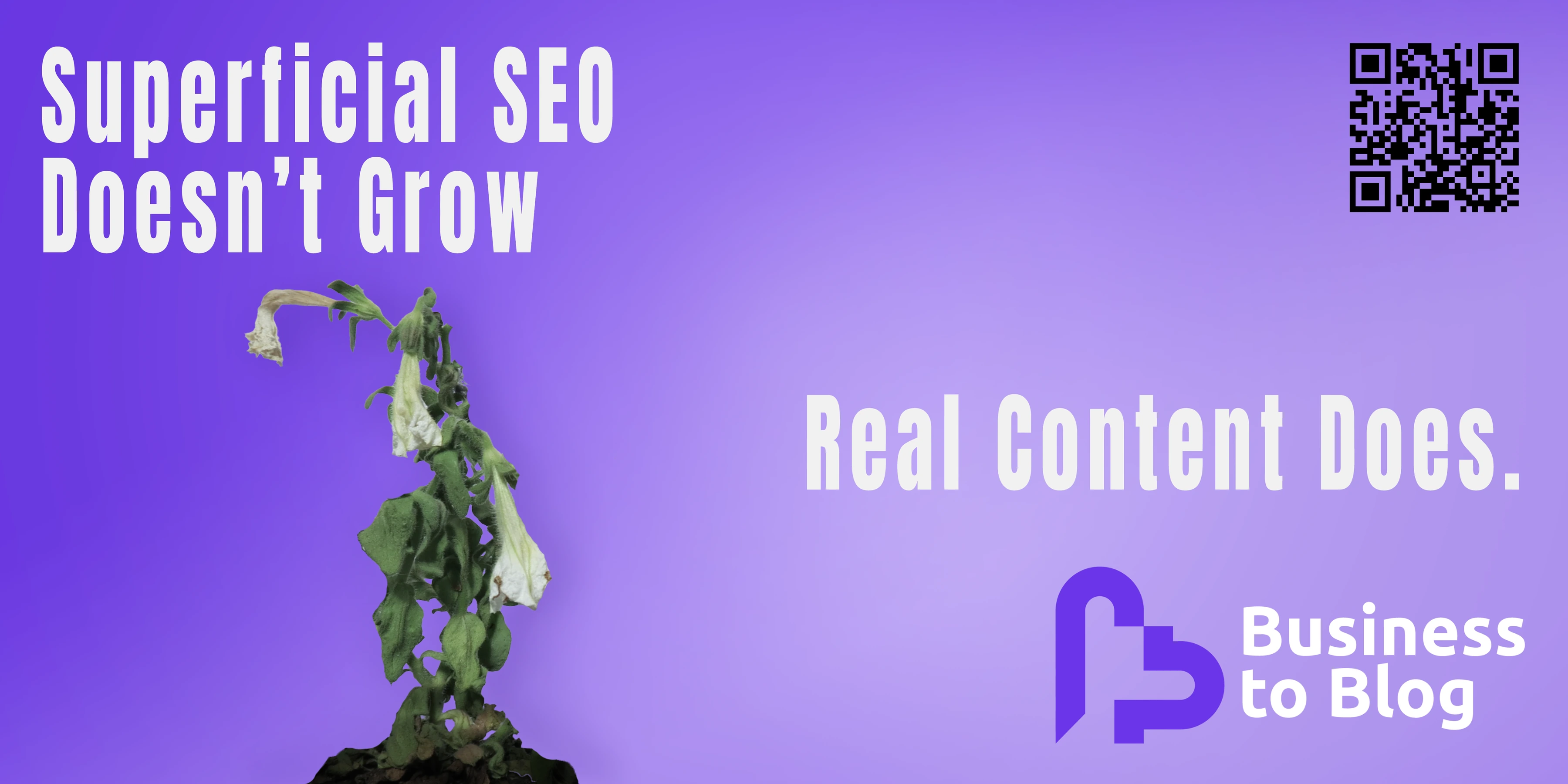
Superficial SEO
Business to Blog is an SEO and digital marketing agency. They wanted to test billboard advertising because they had noticed almost no competition in the medium, while digital advertising in their category is saturated. The theory was that they could buy attention cheaply in a space their competitors had abandoned.
Their audience is small and the sale is high-consideration, so they wanted bottom of funnel. Something that would convert. I told them that's probably why billboards are unpopular with SEO providers, because billboards are typically bad for bottom of funnel. They agreed in theory, but thought it was still worth testing.
Brief:
The client came to me with a draft of what he thought the ad should look like. It had a call to action, an offer, a phone number and an email address. He'd designed a digital ad, because that's his industry. I told him it was too dense. His sites were on highways. Most people who see a highway billboard are driving past it, which gives you a few seconds and no second chance. Every element you add costs you clarity and at this stage there was none left.
He had a small budget and it seemed to him that I wanted to spend it on goodwill that doesn't convert. I didn't argue the theory. I came up with an ad strategy that was as geared toward conversion as it could be while remaining format-appropriate. That way he got what he wanted and I gave him something I was confident would work.
Concept:
His clients are SMEs that have often been burned already. SEO providers would change the keywords and metadata, buy a set number of backlinks, all the low effort tasks, and the rankings move for a while before fading or collapsing when the model they were subverting changes.
Without real content underneath it, the result is temporary. Many of these businesses never benefit enough to offset what they paid. B2B's competition provided SEO that was ephemeral and fragile, while their own was designed to be strong and reliable.
That gave me the campaign: Superficial SEO.
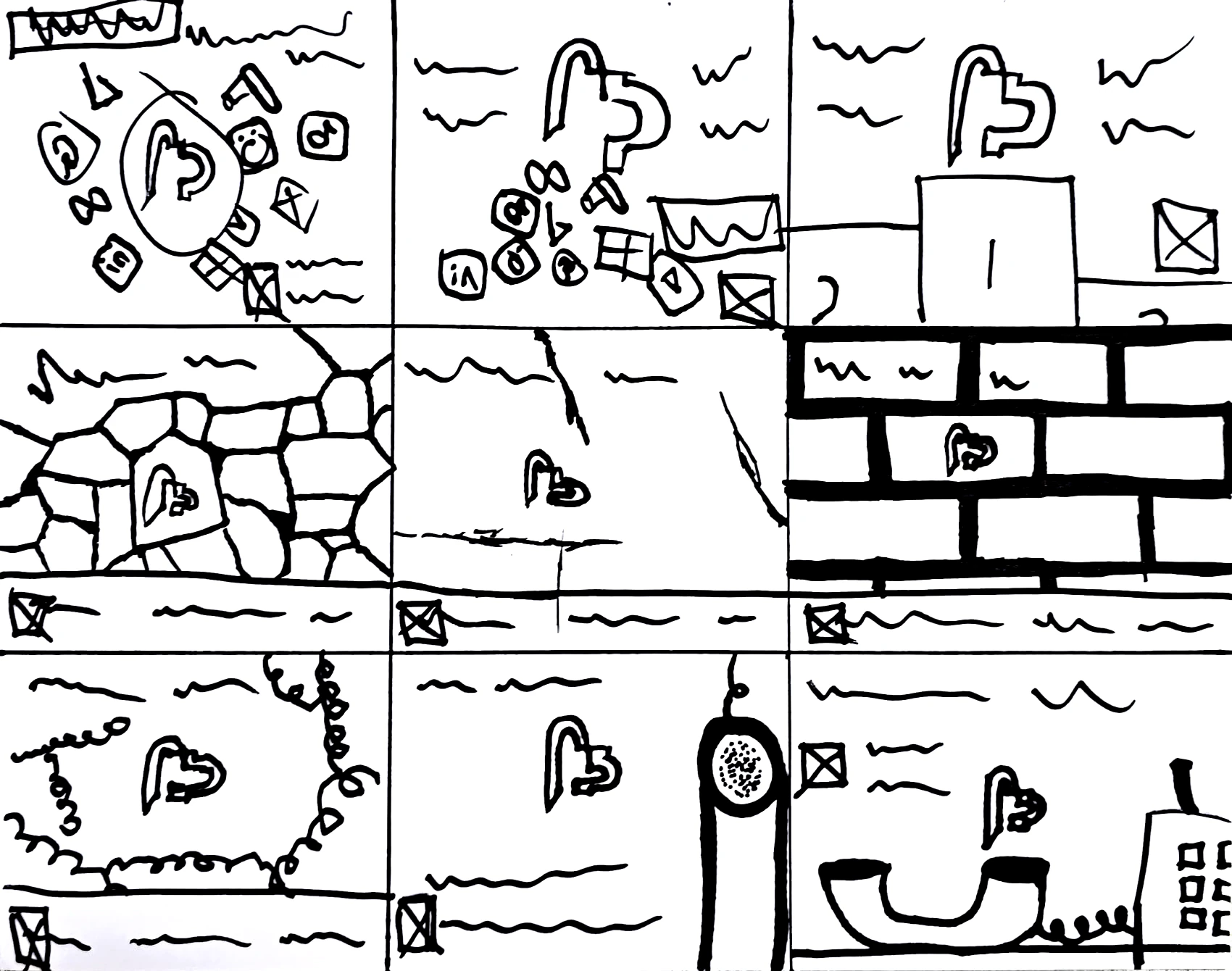
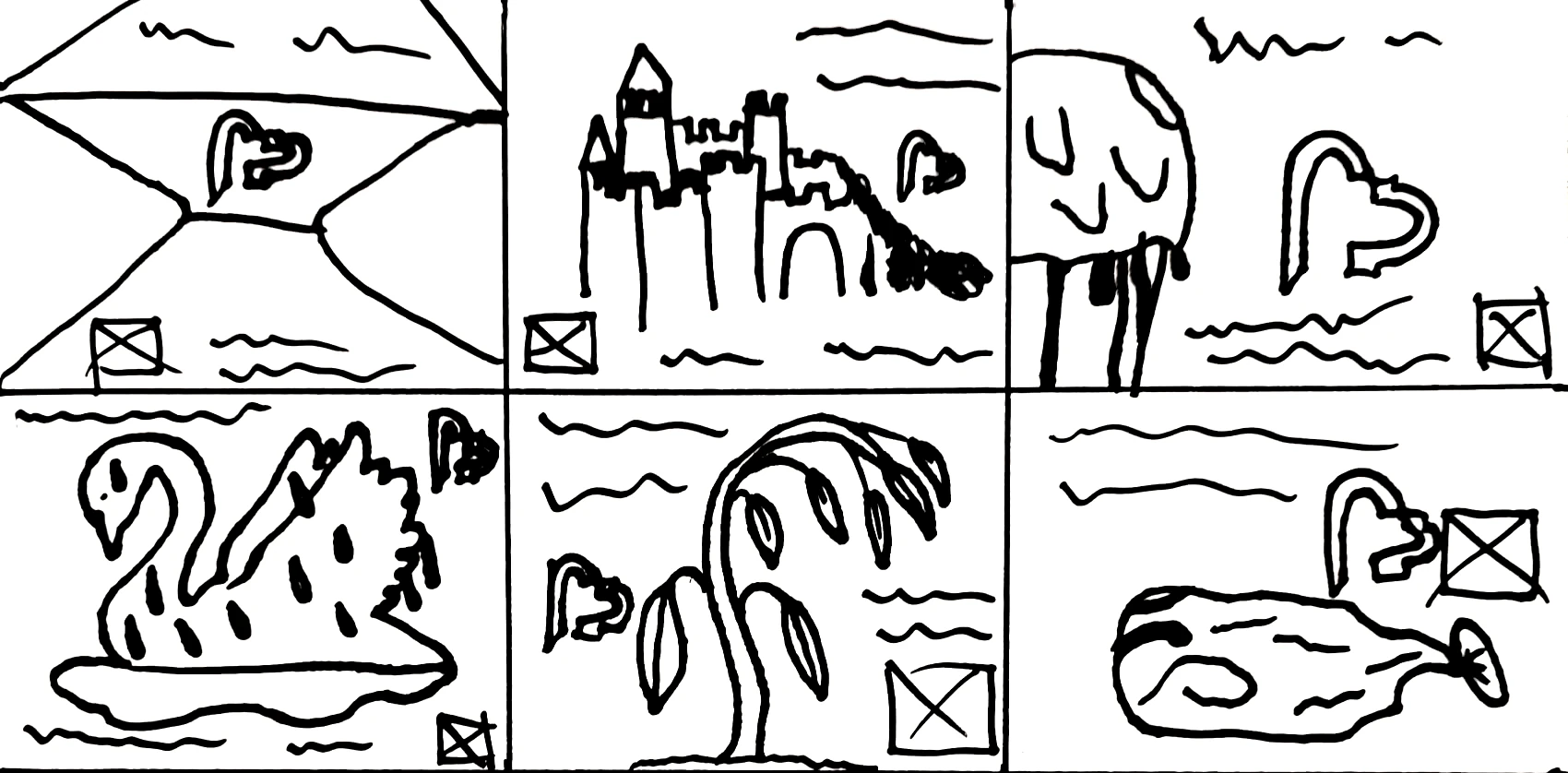
I developed three scenes around fragility. A sandcastle washing away, an ice sculpture melting, and a wilting plant. Each would carry copy comparing the fragility of the object to bad SEO.
B2B decided to go with only the plant and I think that was a good decision. The sandcastle and the ice sculpture spoke to impermanence, but the plant is about growth that failed, which is more evocative of the problem facing a business with superficial SEO.
Driving conversion:
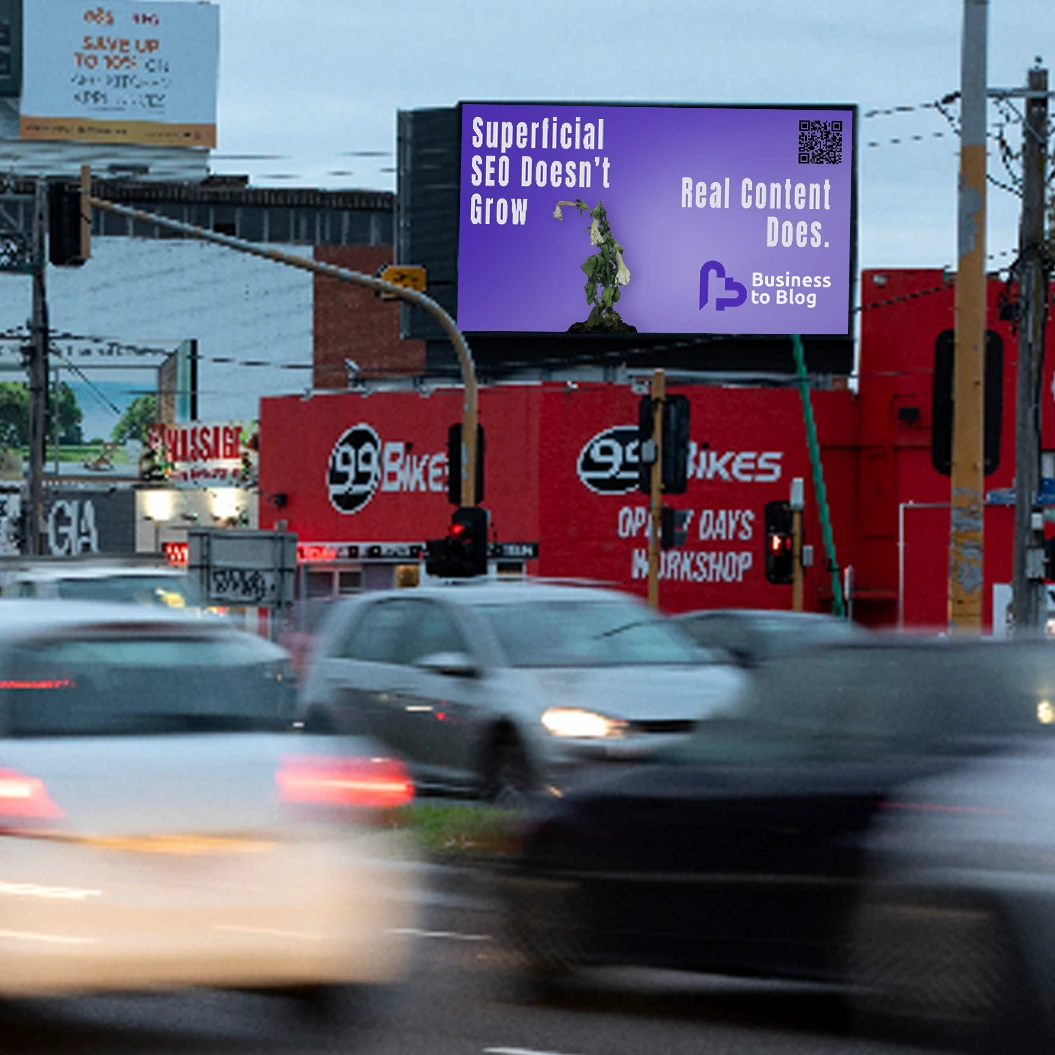
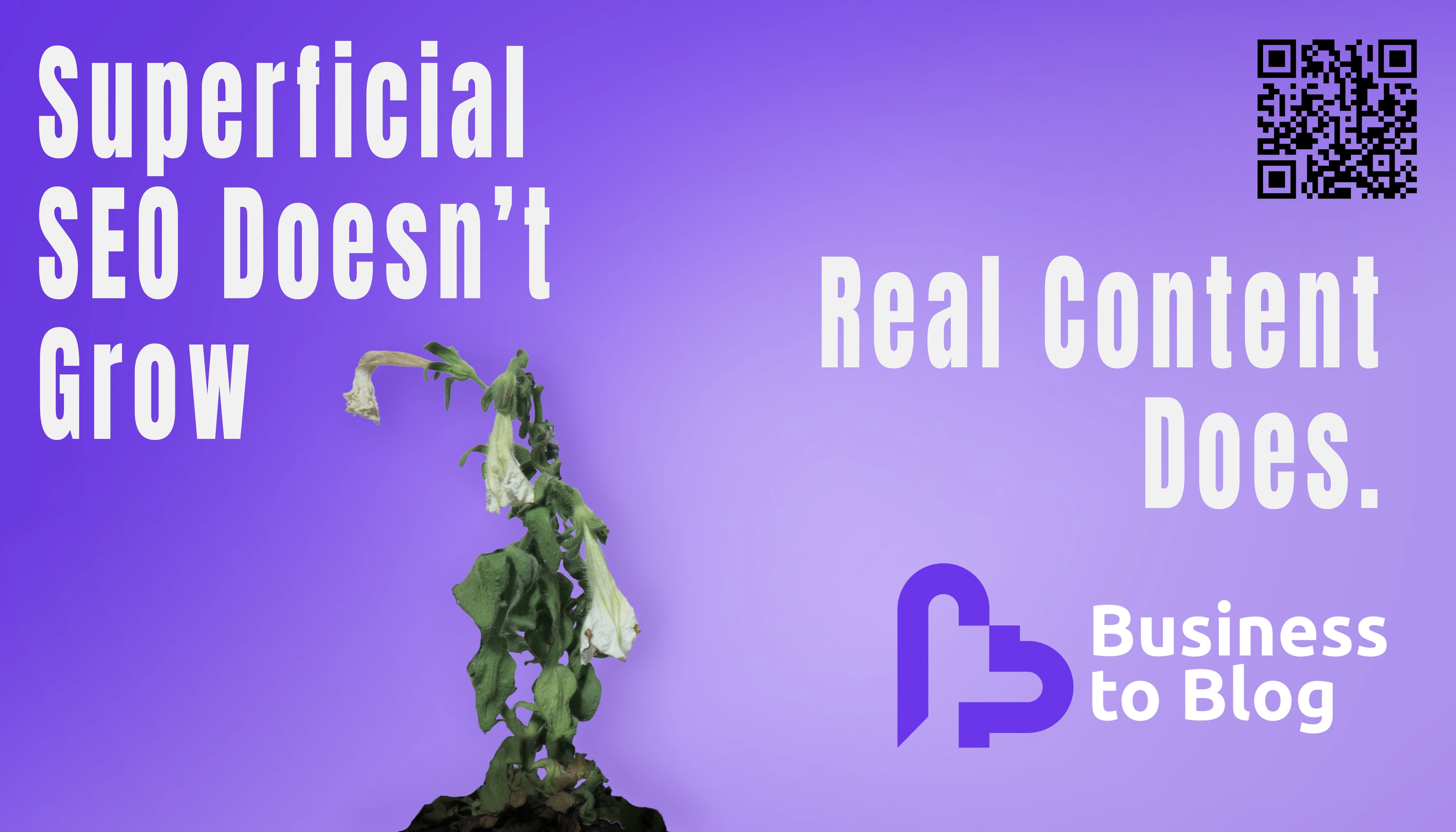
"Superficial SEO Doesn't Grow. Real Content Does." speaks to a problem that much of the audience has lived through. For anyone who hasn't, it still communicates the product and frames the agency as different.
The end line is also an implicit call to action. The company logo placed directly after reads like a continuation of the thought, elegantly yet overtly implying that the reader should go with B2B for lasting growth.
The client wanted a phone number and an email address so a passenger could write them down. I showed him that the bloated CTA was hurting the design. We landed on a QR code, which is a compromise I was very happy with.
A business owner passes the billboard on their commute. They absorb the idea over a few impressions. They see it for the tenth time and maybe think, let me give these people a shot. Then they scan it later, in the simplest way possible, without having to remember anything. That's the beauty of the QR code.
There's also no "scan me" on it. People know what a QR code is. I prefer to trust the intelligence of the audience.
So the ad builds brand impression as its primary job, while the close doubles as the conversion argument.
Result:
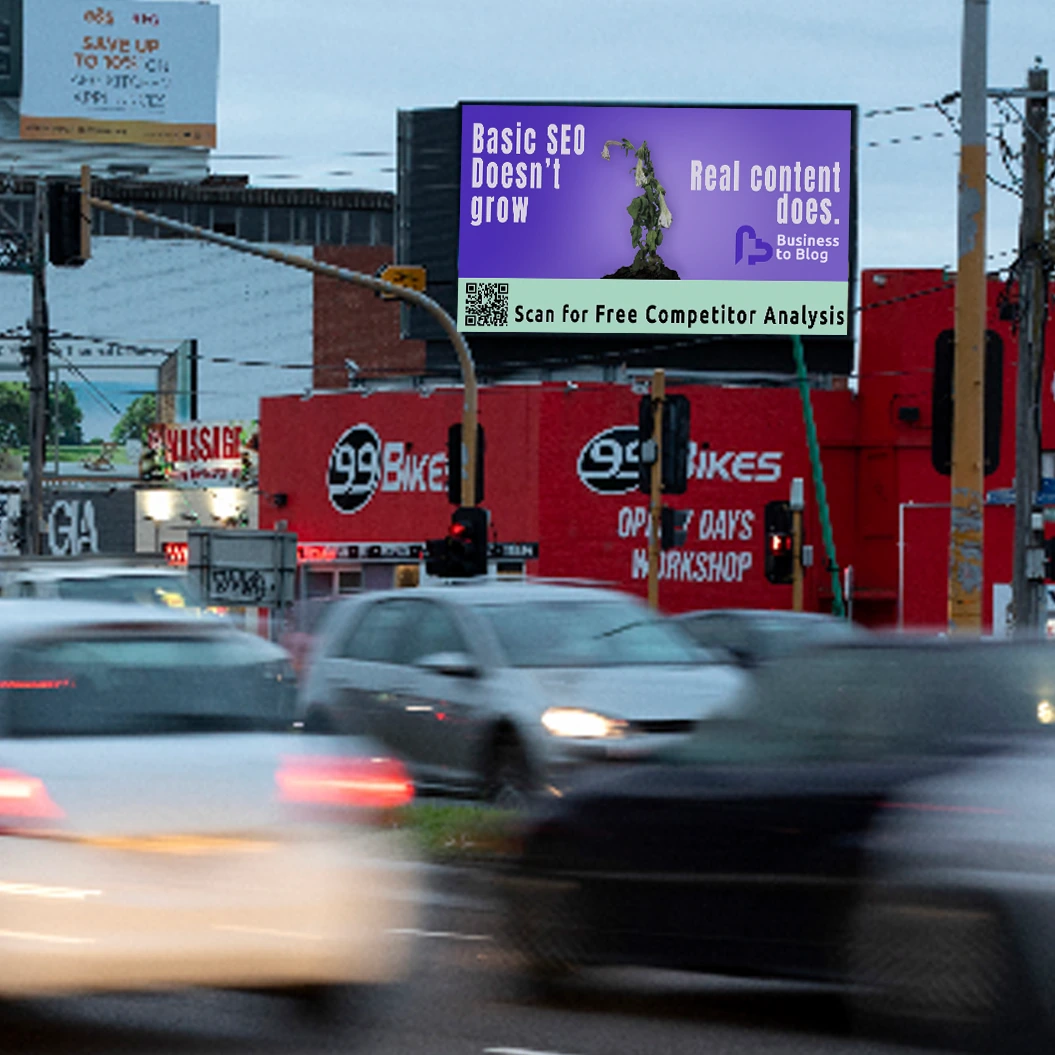
The ad was designed and adapted for two specific billboard sites. Production ran about a month, and in that time B2B picked up enough new clients that they no longer had capacity to take on more. Running the ad would have been redundant, so it has been put on the shelf for the time being.
I expect it will go up as soon as B2B starts looking for new clients again.
Alternative aspect ratio for 2nd planned location.

